F16 Interventions
The following interventions are intentional, human-scaled improvements in public space that make the First 16 Feet more welcoming, active, and inviting for people. These are simple, tactical elements that signal care, encourage social activity, and enhance the everyday experience of streets and sidewalks. They help transform underused frontage into a vibrant, people-friendly space that supports walking, gathering, and commerce.
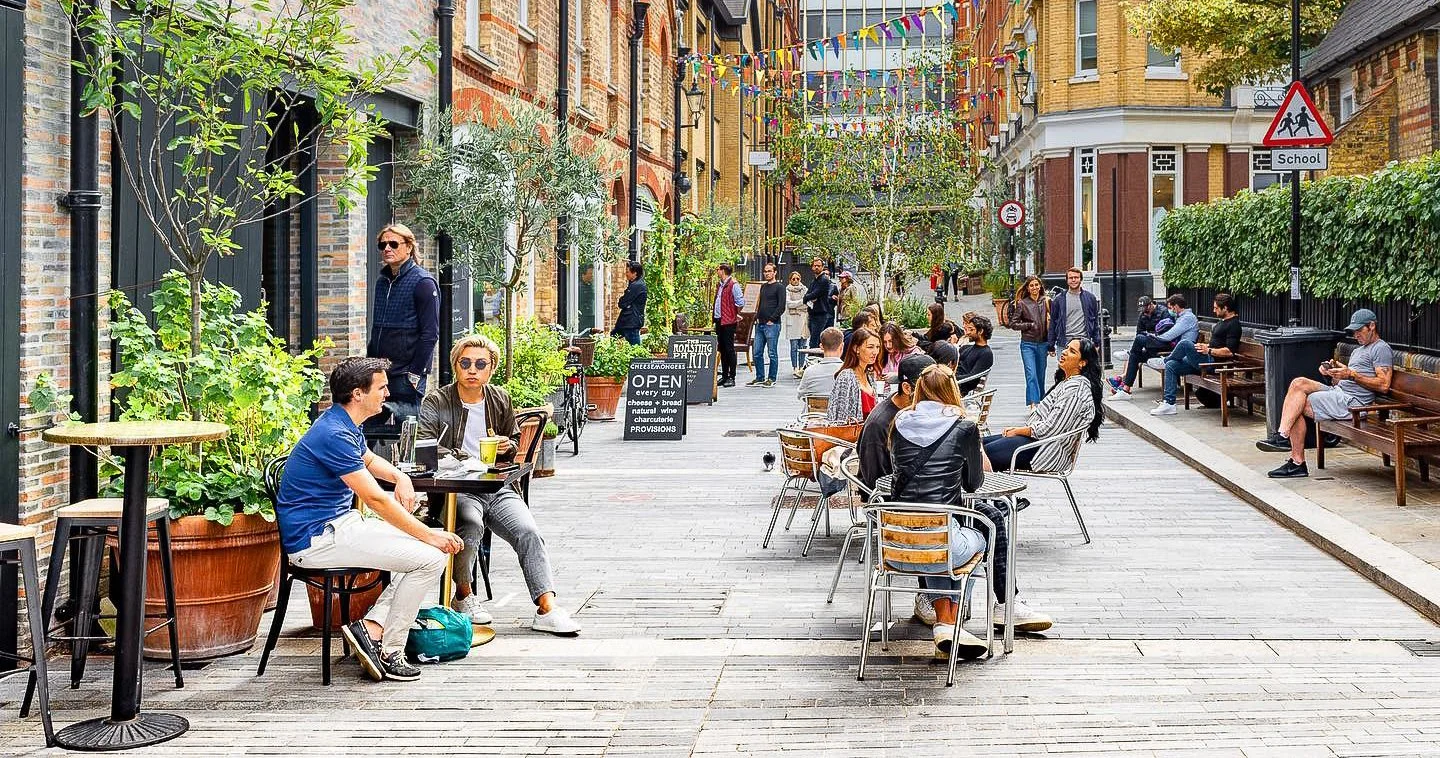
Moveable Seating
Portable seating gives people permission to stay. Unlike fixed benches, movable chairs allow users to claim space, face the sun, turn toward conversation, or pull up to a storefront window. That flexibility creates ownership and interaction.
A simple cluster of chairs can turn unused sidewalk into an outdoor living room. When people linger, storefronts feel alive. When storefronts feel alive, streets feel safe.
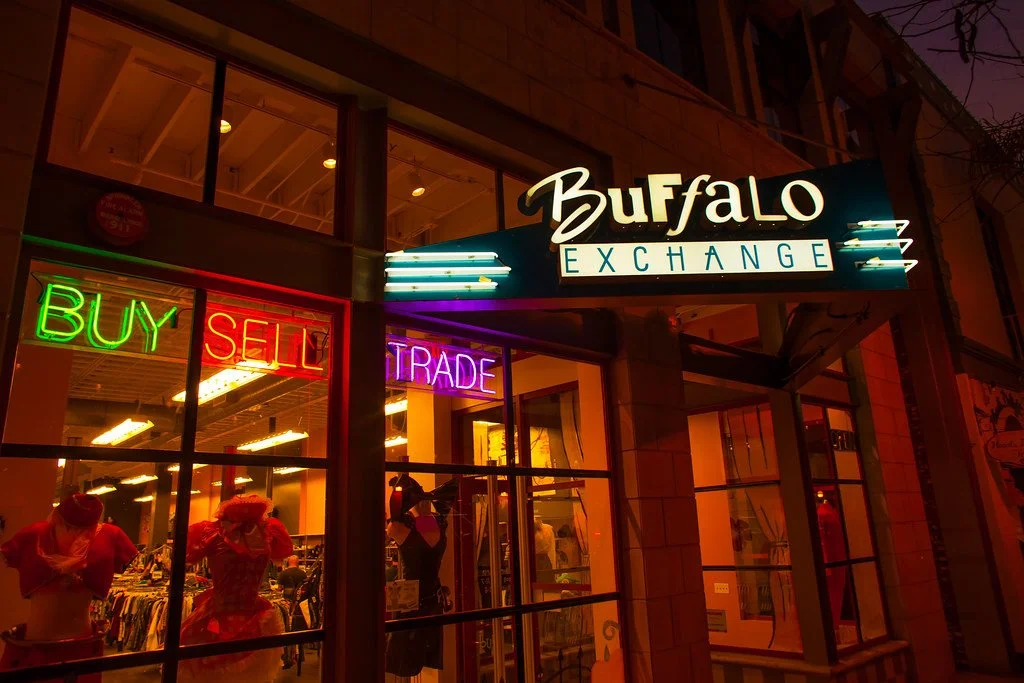
Wayfinding and Signage
Signage at the human scale helps people navigate without feeling overwhelmed. Blade signs, window decals, chalkboards, and sidewalk signs speak directly to the pedestrian.
When messaging lives at eye level, storefronts feel personal instead of distant.
Planters and Green Edges
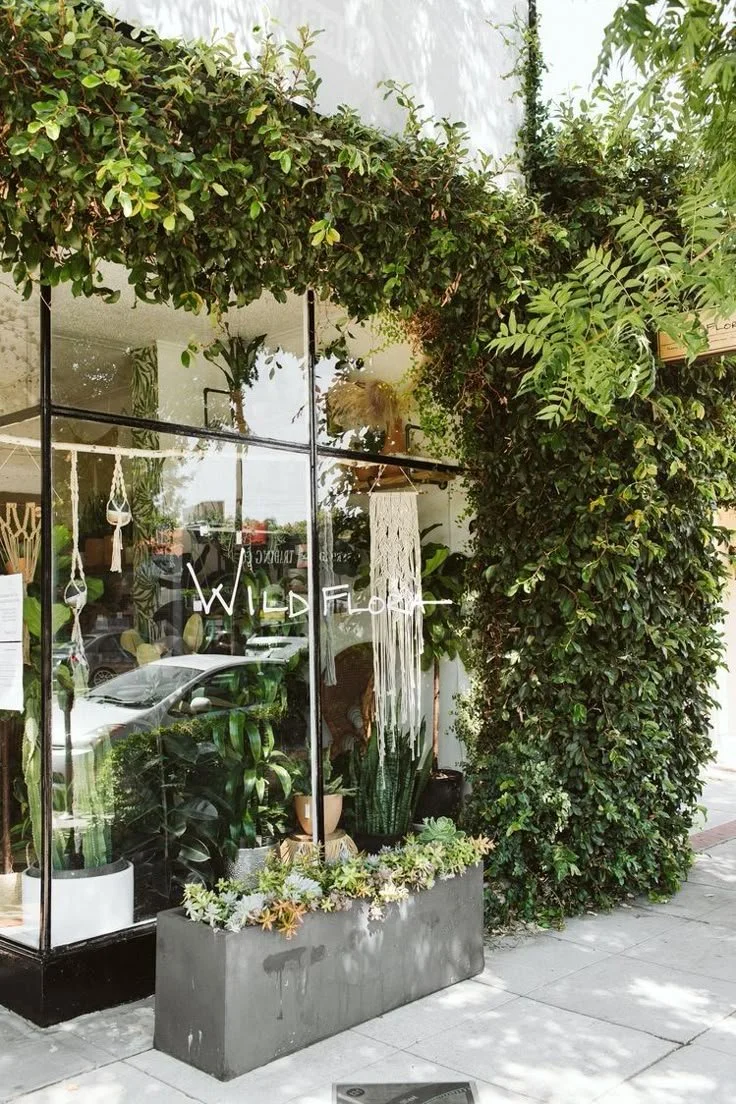
Greenery softens hard edges and signals care. Even small planters introduce texture, shade, and seasonal change to the street edge. Plants make places feel intentional.
Layered at the First 16 Feet, greenery can define space without blocking visibility. It frames storefronts, slows pedestrian movement just enough to notice what’s around you, and improves perception of safety.
Bike Racks and Micro-Mobility Hubs
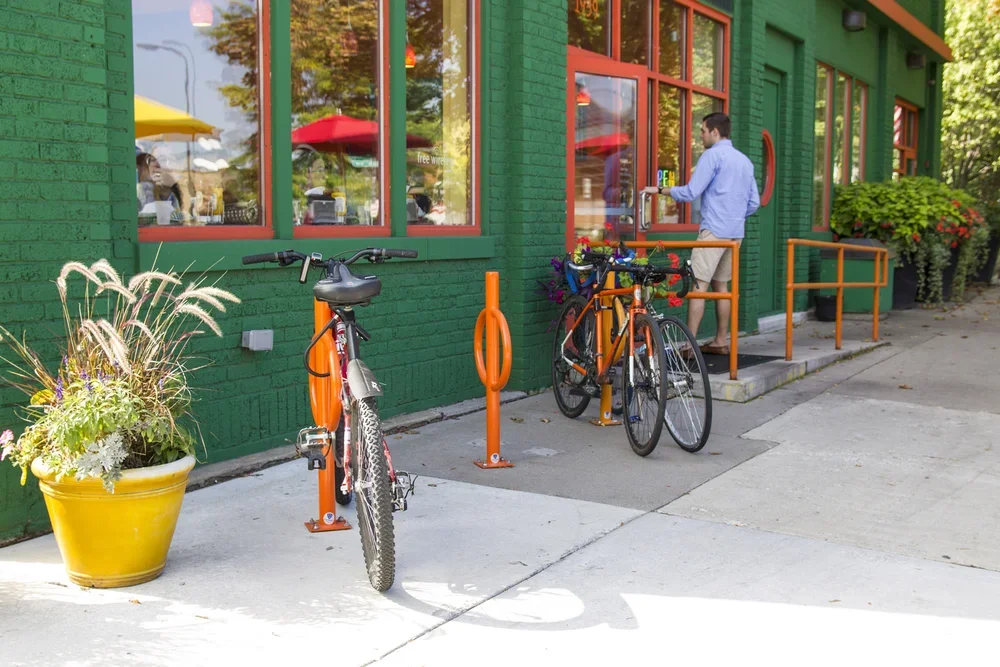
Bike racks are more than infrastructure; they’re a signal that active transportation is welcome. When placed intentionally within the First 16 Feet, racks add daily activity and visible movement.
Every parked bike represents someone choosing to engage with the street at a human pace.
Canopies and Shade
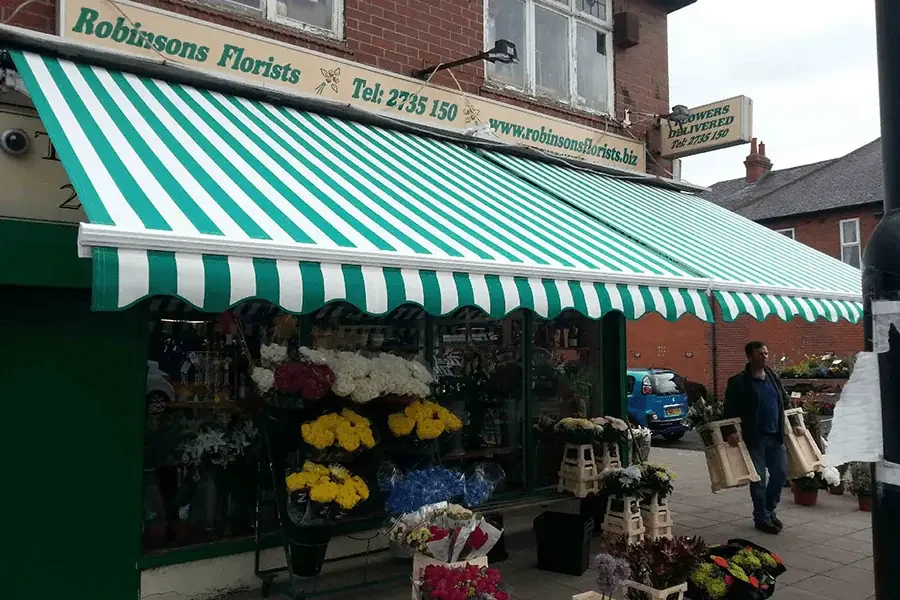
Umbrellas, awnings, shade sails, or tree canopies create microclimates that make sidewalks usable in all seasons. Without shade, a street becomes transitional. With shade, it becomes inhabitable.
Shade encourages stopping. Stopping encourages spending. Spending sustains place.
Music and Soundscapes
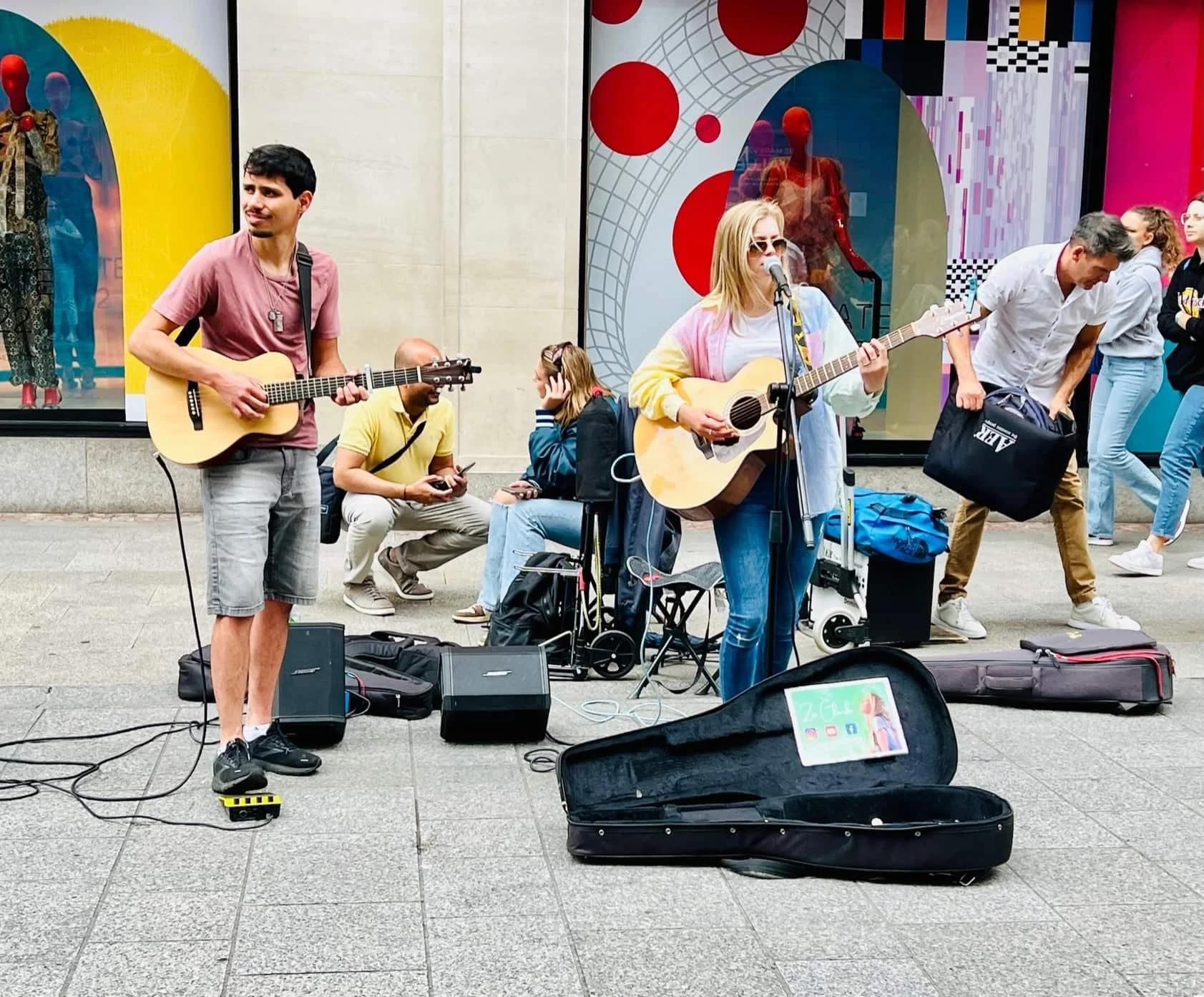
Music and ambient sound introduce atmosphere to the First 16 Feet. They shape how a place feels before someone ever steps inside. A well-chosen playlist, subtle speakers under an awning, or even live acoustic sets can turn a pass-through sidewalk into a space with identity.
Sound slows people down. It draws attention. It softens edges. When done intentionally, it reinforces brand, signals activity, and creates a sense of care at the street level.
Music doesn’t need to be loud to be effective. Its goal isn’t to add noise, but rather to create a mood.
Stoops and Steps
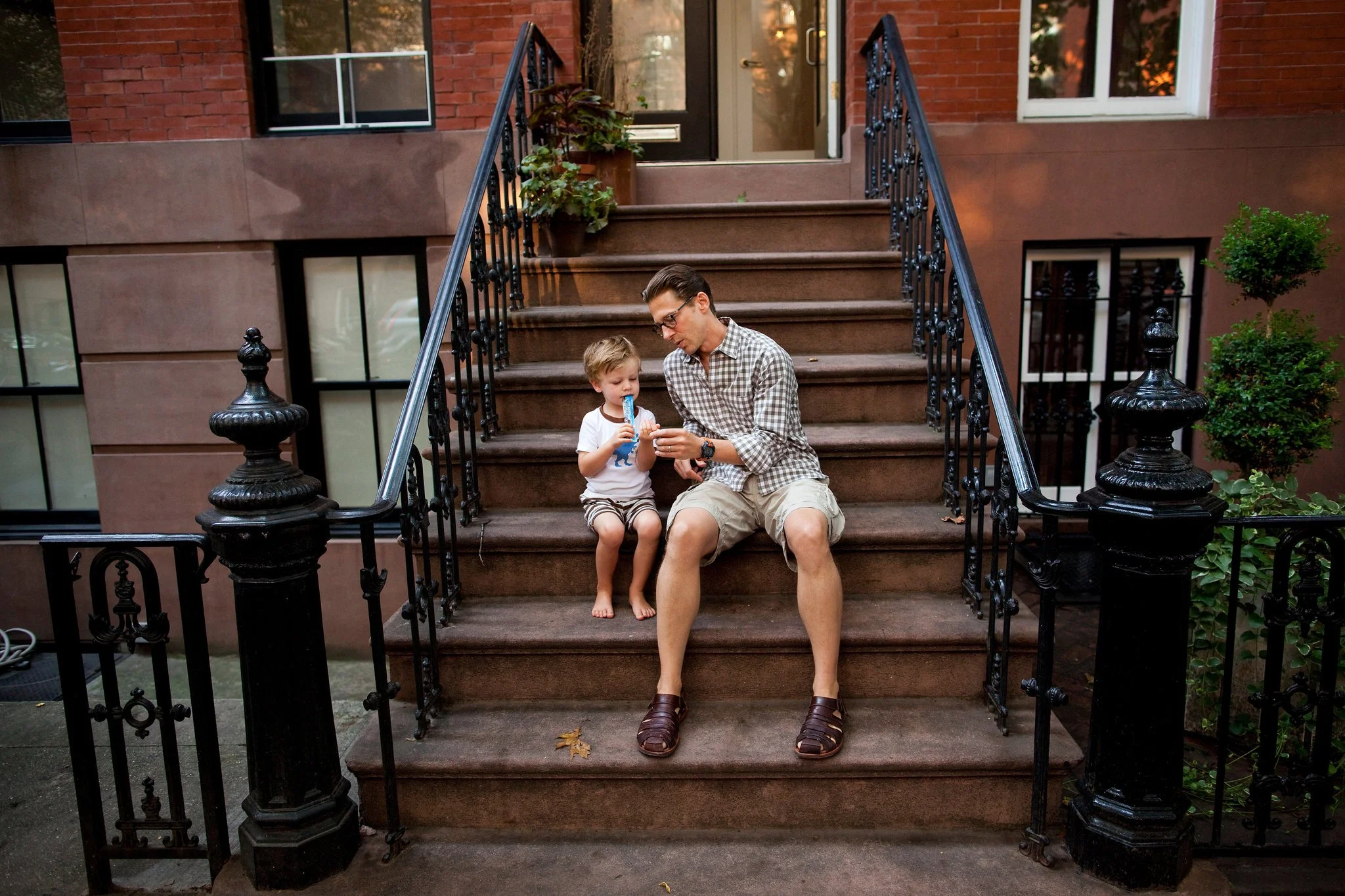
Stoops and steps create the transition between the public sidewalk and the private front door. They introduce subtle elevation and defined edges that invite people to pause, sit, and engage with the street.
Even a modest set of steps can transform a flat facade into usable space. Wide treads double as informal seating. Shallow platforms create room for conversation. That small shift in elevation slows movement and makes interaction more natural.
In neighborhoods, stoops support everyday connection. In commercial districts, they add flexible seating and soften the street edge without major reconstruction.
Colorful Ground Treatments
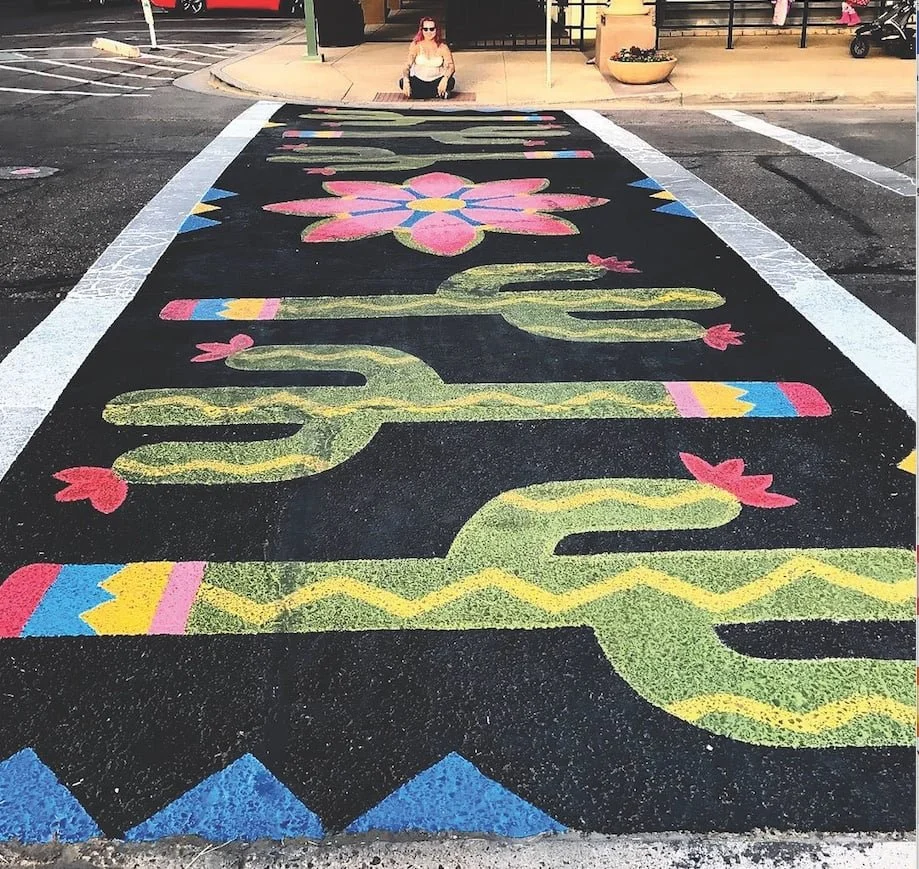
Color at your feet changes how a street feels. Painted crosswalks, patterned sidewalks, bold striping, or simple color blocking can redefine the First 16 Feet without moving a single wall. Ground treatments guide movement, signal arrival, and turn overlooked pavement into part of the experience.
They create visual rhythm along a corridor. They mark gathering zones. They slow traffic and pedestrians just enough to shift awareness.
When the ground plane carries intention, the entire street feels designed. These interventions are flexible, scalable, and fast to implement. They are often the quickest way to test identity before investing in permanent infrastructure.
Window Displays
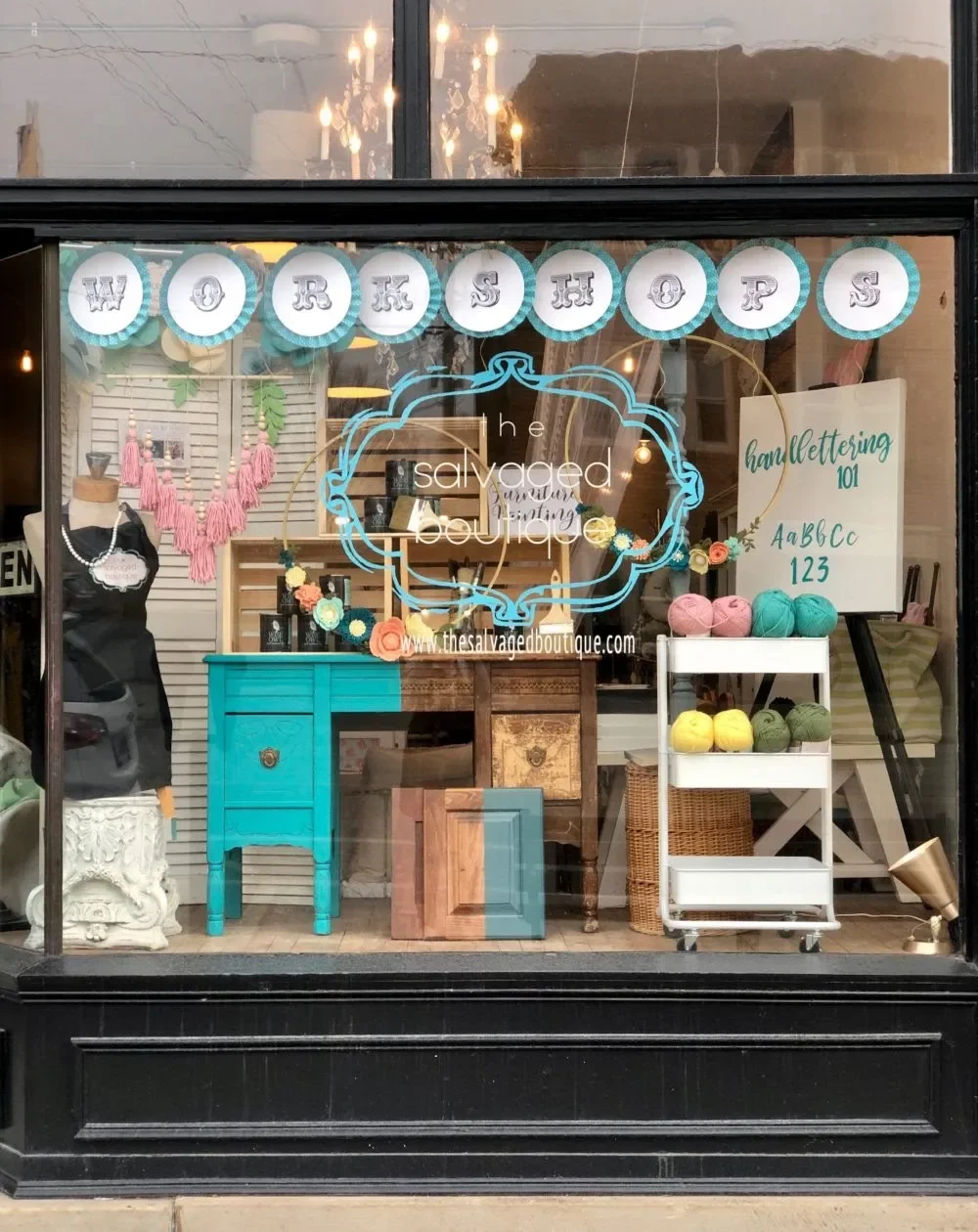
Blank windows feel vacant. Active windows with product display, art, lighting, or storytelling communicate that there’s life inside.
Even closed or vacant businesses can use window wraps, graphics, or community storytelling to maintain energy along the street.
Pop-Up Retail or Food Stalls
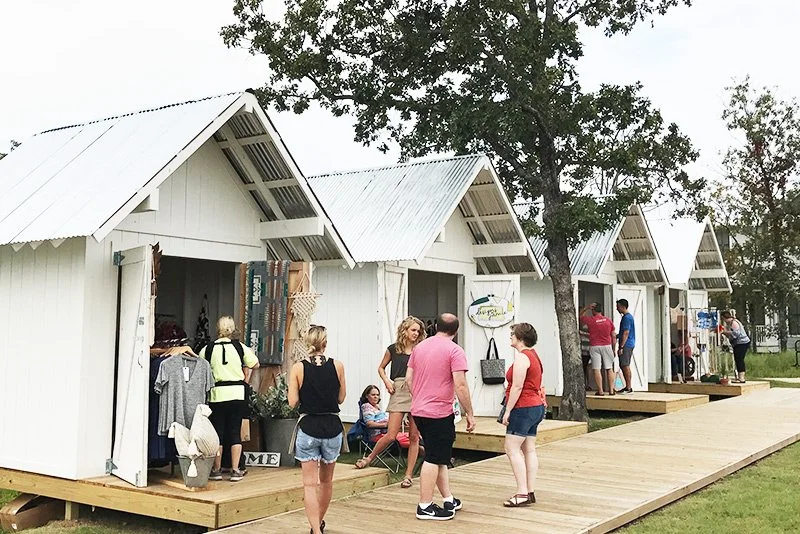
Markets, pop-ups, music, temporary installations, or conversation prompts activate the First 16 Feet with purpose. Programming gives people a reason to show up and a reason to return.
Even small-scale activations create memories that can build an identity for a place.
Chalkboards and Message Boards
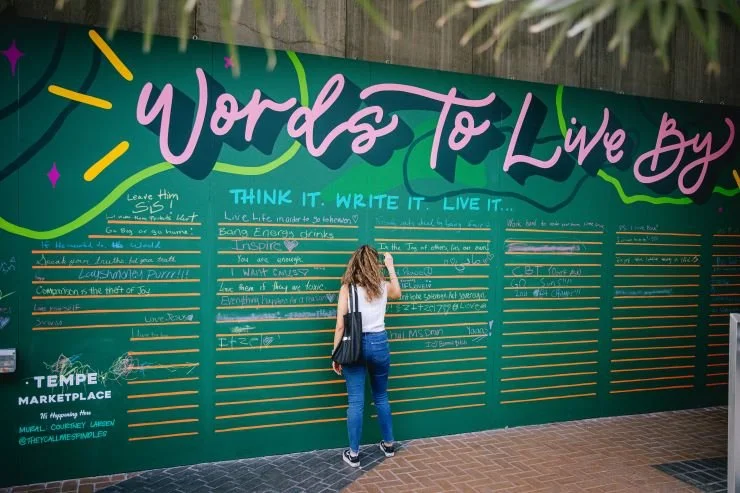
Chalkboards and message boards invite participation at the street edge. They turn a storefront from something you pass into something you engage.
A daily quote. A handwritten menu. A community question. A place to post an event. These small, changeable surfaces create reasons to stop, read, respond, and return.
Because they are editable, they keep the First 16 Feet dynamic and draw attention.
Message boards also lower the barrier between business and neighbor. They create a voice that feels human rather than corporate. Imperfect handwriting becomes part of the charm.
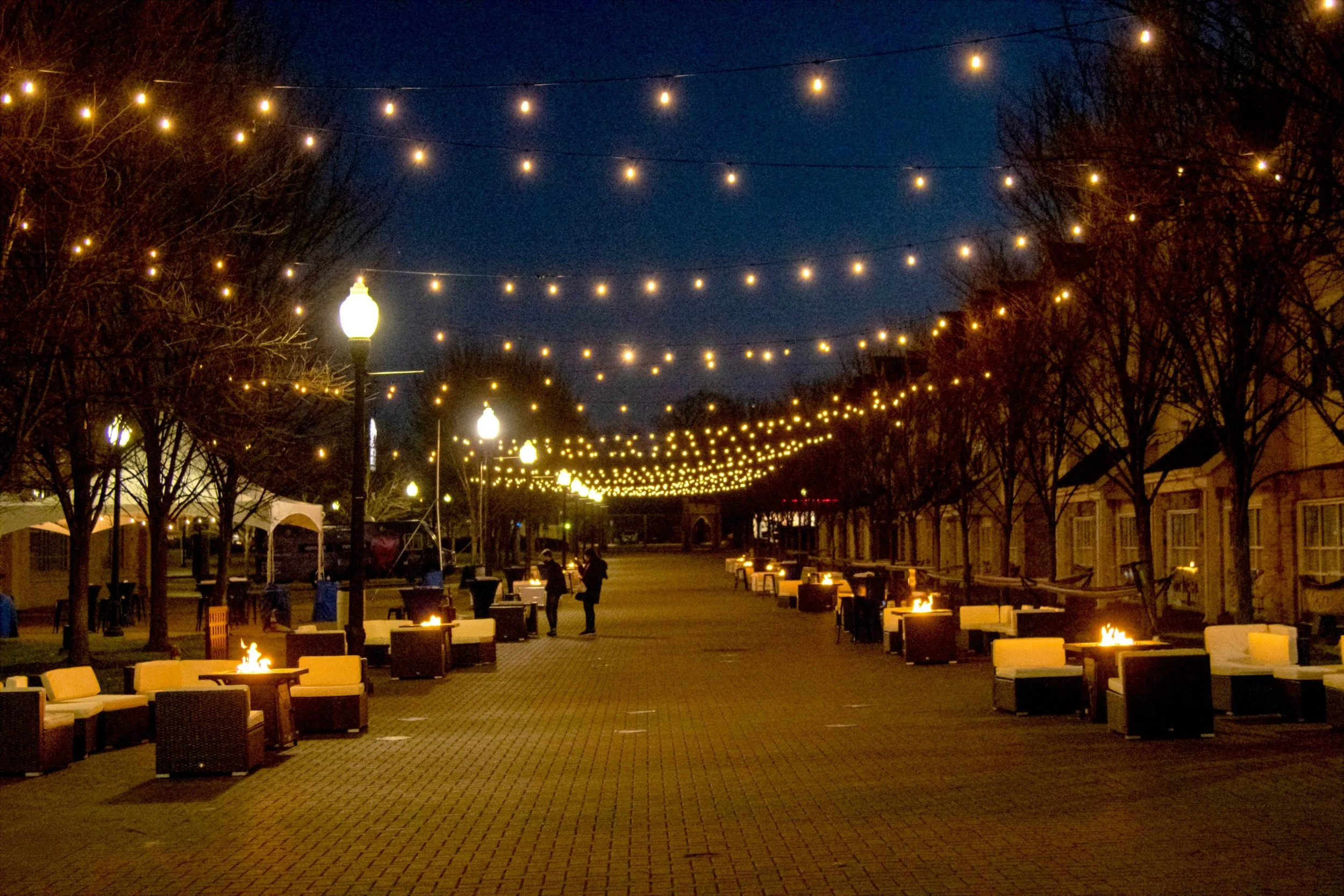
String Lights and Glow
Lighting extends the life of a place. String lights, sconces, under-awning glow, or facade uplighting create warmth and visibility after dark.
Thoughtful lighting at eye level makes people feel seen and safe. It highlights entrances, defines edges, and builds an atmosphere that can’t be achieved with overhead streetlights alone.
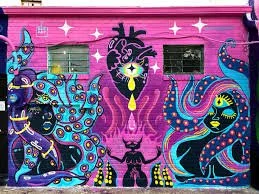
Murals and Art Walls
Art transforms blank walls into moments of identity. A mural tells a story, reflects local culture, or simply adds color where monotony once lived.
At the First 16 Feet, murals act as magnets. They create photo moments, spark conversation, and give people a reason to walk one block further.